
My husband and I got married when I was 32 and started trying to have children right away. After a year of trying naturally, we were referred to the fertility clinic in Calgary. In the meantime, friends, doctors, colleagues all told me to “relax”, “stop taking too much on”, I need to “de- stress”. So, I listened to the advice and spent thousands of dollars on massage and fertility acupuncture, stopped volunteering for the charities I supported, and resigned from the boards I sat on.
When we became patients at the Regional Fertility Program in the fall of 2013, the diagnostic testing showed that the issue wasn’t me, or my stress level, at all. 87% of my husband’s sperm are coated in an anti- sperm anti-body that won’t allow them to penetrate an egg – an issue likely caused by a sports injury when he was younger. Our fertility doctor gave us our options: naturally, we had a 3% chance of getting pregnant any given month; if we chose to try IUI, we might have a slightly better chance at 4%; but with IVF we would have more than a 50% chance of having a baby.
While much more expensive and invasive, we opted to try IVF so that we had the greatest chance of success. We were lucky – we had room on a credit card for that upfront cost of almost $10,000 over a decade ago.
I had just turned 35 when we did our first egg retrieval, and in the time between the baseline tests and when we got into the IVF program, my ovarian reserve had gone into decline. The result was four not-great quality embryos, so they implanted two. I got pregnant but miscarried both at seven weeks. We tried again as soon as we were able, this time needing a loan; by that time, I was 36. But the good news was that the doctors had learned how my body reacts to the various drugs and were able to put me on a protocol that gave me better success the next time around.
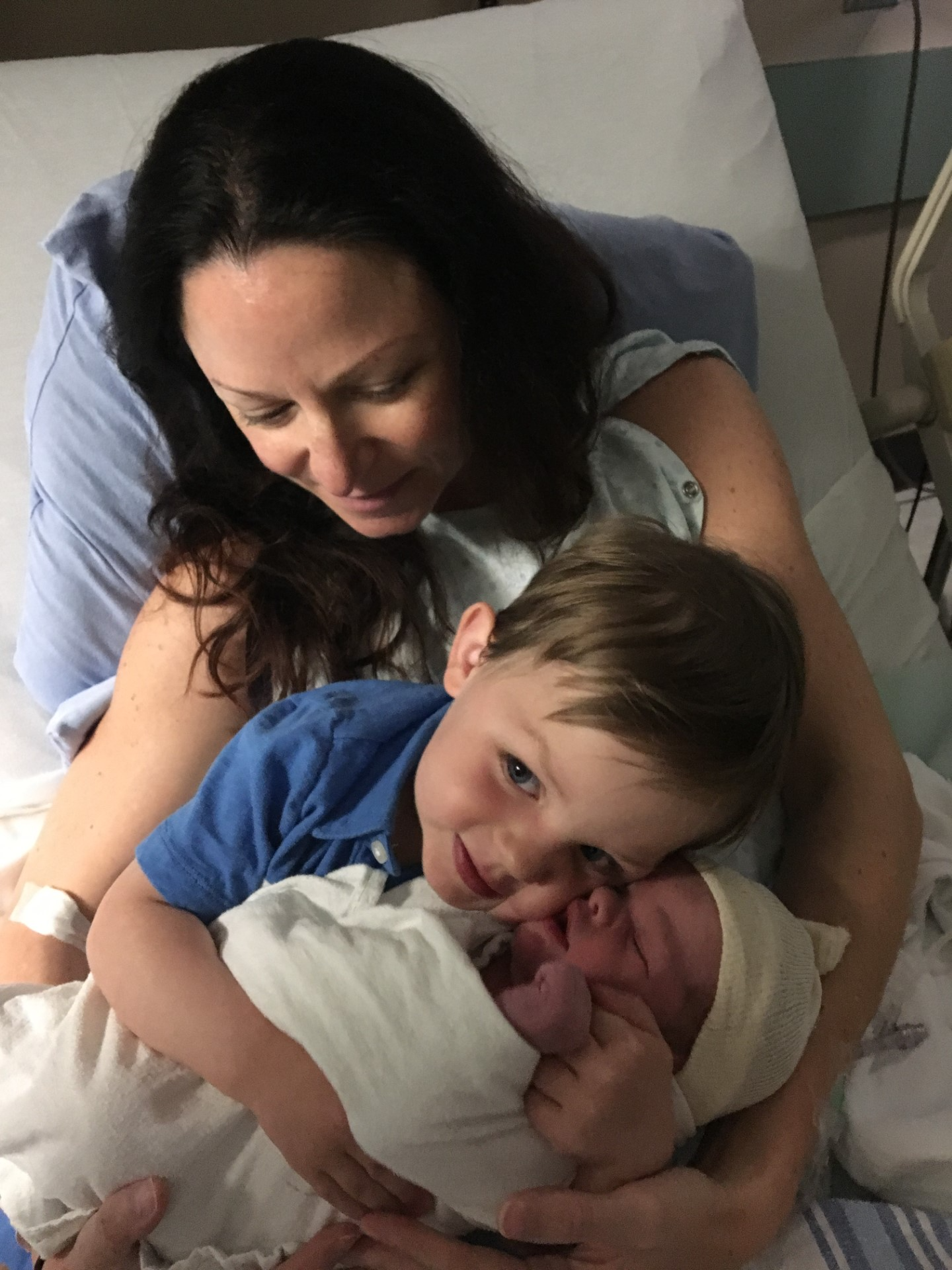
Our second and final round of IVF resulted in more, better quality, fertilized embryos and the fresh transfer of one resulted in my son Jameson. Not knowing whether we would have trouble conceiving again, we tried a frozen transfer when Jameson was 15 months old, resulting in our second son, Bennett.
With treatment and drugs (not all were covered by my husband’s insurance), it cost us $30,000 to have our two beautiful boys. The money, the mood-altering drugs, the needles that I’m terrified of, the stress and uncertainty, the isolation (not knowing anyone else going through it and feeling like I was the only one), the years away from excelling in my career - I wouldn’t change any of it for the world. Every single day I feel fortunate that we had a diagnosed issue that has a well-proven medical solution, that the science worked for us, and that we could find the money to pay for it.
That’s why Fertility Alberta aims to break down barriers to improve access and outcomes for all Albertans who require fertility care to build their families.